How to clean gas grill burner tubes
~20 minutes. Fixes yellow flames, uneven heat, and burners that won't stay lit.
The burner tube is the metal pipe that carries gas to the flame. It has two failure modes that cleaning fixes: clogged ports and blocked venturi tubes. Clogged ports mean grease and carbon have sealed off some of the small holes that let gas out. A blocked venturi means a spider or mud dauber built a nest inside the air-intake end of the tube. Both cause yellow flames and uneven heat, and both clear in under 20 minutes.
Close all burner valves and the propane tank valve before removing any part. Wait until the grill is cool to the touch. Never clean burner tubes with the gas on or the grill hot.
Symptoms that point here
- Yellow or orange flame: incomplete combustion, usually a blocked venturi or clogged ports restricting air or gas flow. The yellow flame guide covers the full diagnosis.
- One burner clearly weaker than the others: clogged ports on that burner, or a spider nest in that burner's venturi tube. See also one side of the grill not working.
- Flame dies after lighting: ports may be clogged enough that gas cannot sustain a flame, or the venturi is blocked and the air-to-gas ratio is off. The burner won't stay lit guide adds the regulator checks.
- Uneven heat across a single burner: some ports are clogged while others are clear, so the flame only covers part of the tube.
If all burners are running low and cool (not just one), start with the regulator reset first; that is a different problem with a different fix.
What you need
- • Flashlight (low-angle light shows blocked ports best)
- • Paper clip or stiff wire (port clearing, free)
- • Pipe cleaner or thin flexible brush (venturi clearing)
- • Stiff brush and dry cloth (exterior sweep-down)
- • Heat-resistant gloves (the firebox is greasy)
Most of this is already in a kitchen drawer. The kit below covers the rest.
Heads up: The product links on this site are affiliate links. If you buy through them, Grill Patrol may earn a small commission at no extra cost to you. We only point to gear we’d put on our own grill. Disclosure.
How to clean them, step by step
Step 1: Turn off the gas and cool down
Close all burner valves, then close the propane tank valve. Wait until the grill is completely cool before proceeding. Warm metal is easy to burn yourself on.
Step 2: Remove grates and flavorizer bars
Lift the cooking grates off, then remove the flavorizer bars or heat plates to expose the burner tubes below.
Step 3: Inspect the ports
Look at the top of each burner tube. The ports are the small holes, usually arranged in a row or in a pattern along the tube. They should look open and round. Hold a flashlight at a low angle to see each one clearly. Darkened, crusted, or collapsed ports mean blockage.
Step 4: Poke each port clear
Straighten a paper clip or find a stiff piece of wire. Push it into each port from the outside, perpendicular to the tube. The goal is to break up the crust and push it inward, not to enlarge the hole. The port size is calibrated to deliver the right gas-to-air ratio; do not drill or ream them. After poking, sweep loosened debris away with a stiff brush.
Step 5: Remove the burner and clear the venturi tube
The venturi tube is the wide, flared end of the burner that sits near the gas valve orifice. It draws in air as gas flows past, mixing the two before combustion. Spiders and mud daubers build nests here because they are drawn to the faint gas smell.
Remove the burner from its support bracket (usually one screw, or just a simple lift). Shine a flashlight into the venturi inlet. Any webbing, mud, or debris will be visible. Run a venturi brush or a pipe cleaner from the inlet toward the burner tube, working the debris out. Do not push material deeper into the tube.
Venturi tube cleaning brush
A long, thin flexible brush sized to reach the full venturi tube, which a paper clip cannot. Lengths and quality vary and we have no single verified pick here, so this is a search link: pick the length that fits your tubes.
Step 6: Brush the tube exterior and wipe down
Use a stiff brush to sweep carbon from the burner body and the port area. Wipe down with a dry cloth. Avoid getting water inside the tube.
Step 7: Reinstall and test
Reinstall the burner on its support, replace the flavorizer bars, replace the grates, then open the tank valve slowly and light each burner. A properly cleaned burner shows a mostly blue flame that runs consistently along the full length of the tube. Yellow flame or weak spots after cleaning point to a tube that needs replacing.
Want numbers instead of eyeballing it? Check for even heat at grate level with a good grill thermometer; factory lid dials often read low.
When to replace the tube instead of cleaning it
Cleaning cannot fix a tube that has corroded through. Replace when:
- • Rust holes are visible along the body of the tube (gas escapes before reaching the ports)
- • The ports along the top have corroded and merged together or collapsed
- • The tube is badly warped and will not seat properly on its support
- • Flame is still weak or yellow after a thorough port clearing and venturi cleaning
Burner tubes are model-specific. Tube length, inlet diameter, and port pattern vary between grill brands and models. Measure the length and confirm the inlet before ordering; the burner tube replacement guide walks the measuring, the matching, and the swap. For Weber Spirit parts, see the Weber Spirit parts guides.
The burner-tube cleaning kit
Port clearing itself is free: a paper clip and a flashlight. These four cover the jobs around it, including the one case cleaning cannot fix.
The kit cards below are affiliate links. If you buy through one, Grill Patrol earns a small commission at no extra cost to you.
-
 For the sweep-down
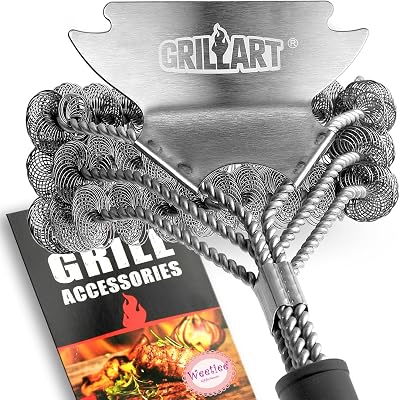
Bristle-free grill brush + scraper
The Step 6 tool. After you poke the ports clear, this sweeps the carbon crust off the tube exterior and out of the firebox. The coiled head has no loose wire bristles to snap off near the ports, and the scraper edge lifts baked-on crust. The bristle-free pick in every Grill Patrol kit.
-
 For the teardown
Heat-resistant grill gloves
Cleaning burner tubes means pulling grates, flavorizer bars, and the burner itself out of a greasy firebox. These are rated to 932°F, so you can lift warm parts and keep rust and grease off your hands through the whole job.
-
 For the firebox
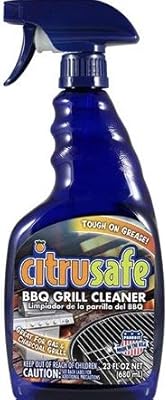
Citrusafe grill cleaner
Burner tubes sit in a grease box. With the burners out for cleaning, spray the firebox floor and grease tray with this food-safe citrus degreaser, let it sit, then rinse. Apply to a cool grill only, never a hot one.
-
 Replacement part — not a cleaner
Stainless replacement burner tube (fits front-control Weber Spirit E/S-210)
Rust holes along the tube body or ports that have corroded and merged together cannot be cleaned back to health. This stainless replacement fits the front-control Weber Spirit E-210 or S-210 only; confirm your grill is that model run before ordering. Every other grill: match the tube to your brand and model.
Burner tubes are model-specific. For the front-control Weber Spirit E-210 or S-210, this stainless aftermarket tube fits that model run. Confirm your grill is the front-control 200-series before ordering; the Spirit 300 series uses a different tube.
Weber Spirit replacement burner tube on Amazon →
Not sure which Spirit you have? The Spirit 200 vs 300 parts guide sorts it out in one step.
FAQ
Look for a yellow or orange flame instead of blue, weak or uneven flame along one burner, or a burner that lights but dies quickly. Visual inspection of the ports (small holes along the top of the tube) reveals blockage: ports should look clear, not darkened or crusted.
With the gas off and the grill cool, straighten a paper clip or use a stiff piece of wire and poke each port from the outside. Do not enlarge the holes; just break up the crust. Sweep loosened debris with a brush or compressed air, then wipe clean.
Yes. Spiders and mud daubers are drawn to the faint gas smell inside venturi tubes. Even one small nest can restrict gas flow enough to produce a yellow flame or kill a burner entirely. It is the most common seasonal issue for grills that were stored over winter.
Yellow flame means incomplete combustion, usually because something is blocking gas or air flow: clogged ports, a spider nest in the venturi tube, or a misaligned venturi that is not drawing enough air. A properly burning gas grill flame is mostly blue with yellow tips on the outer edges.
Inspect the ports and venturi tubes at the start of each season and any time you notice a yellow flame, uneven heat, or a burner that will not stay lit. A visual check takes five minutes and can prevent a frustrating diagnostic session later.
Replace when the tube has visible rust holes along the body (not just at the ports), when the ports are so corroded they have merged or collapsed, or when the tube is badly warped. Cleaning a tube with rust holes will not restore consistent flame because gas escapes through the holes before reaching the ports.
Related guides
Gas grill burning yellow or orange
The full diagnosis behind the symptom that most often sends readers to this page.
Gas grill burner won't stay lit
Flame lights then dies: regulator resets plus the port cleaning this guide feeds into.
Gas grill won't ignite
No spark or no catch at all is an ignition problem, not a combustion one. Start here.
Gas grill uneven heat
Hot spots and cold zones traced to clogged ports, worn bars, or a stuck regulator.
The safest grill brushes
Bristle-free picks for the sweep-downs that keep ports clear. No wire bristles in your food.
How to replace grill burner tubes
Measuring, matching, and the swap for tubes that are past cleaning.
The quarterly teardown covers the grates, flavorizer bars, firebox, grease drain, and tray in one session.
Read the deep-clean guide