Gas grill heats unevenly? Find the cause and fix it for free.
Hot spots and cold zones are almost always a cleaning or alignment problem, not a hardware failure. Work through this ladder and you will usually find the fix before spending anything.
Our safety claims cite primary sources (CPSC, AMA). Picks are cross-checked against the 2026 CPSC wire-bristle recall. Live prices and ratings stay on Amazon, where they’re always current.
If you smell gas at any point during this process, do not try to light the grill. Turn all burner knobs off, close the propane tank valve, and step away. Run a soapy-water leak test on all fittings before proceeding. A gas leak is not a DIY fix.
Know the symptom? Jump to it
Most uneven-heat problems are a free fix. The regulator reset and a burner cleaning resolve it the majority of the time.
- Time
- 20 minutes
- Cost
- Usually free
- Skill
- Beginner-friendly
- Tools
- A flashlight and a thin brush
- 1 Reset the regulator if all burners are low
- 2 Preheat 10 to 15 minutes, lid closed
- 3 Clean burner ports on the cool-side burner
- 4 Reseat and inspect flavorizer bars
- 5 Check venturi tubes for spider nests
- 6 Replace burner or heat plates only if corroded
First: is it all burners or just one?
This split tells you where to start. All burners low points to supply or regulator. One burner struggling points to that burner itself.
Heads up: The product links on this site are affiliate links. If you buy through them, Grill Patrol may earn a small commission at no extra cost to you. We only point to gear we’d put on our own grill. Disclosure.
The fix ladder (free fixes first)
Every rung below costs nothing. Only move to the parts section after you've cleared all of these.
Reset the regulator
All burners running uniformly low? This is the most common cause.
Deep dive
If every burner runs low and cool but you have a full tank, the regulator's excess-flow safety has likely tripped into bypass mode. This happens when the tank valve is opened too quickly, creating a pressure surge the regulator interprets as a leak.
The full reset procedure:
- Turn all burner knobs off.
- Close the propane tank valve (clockwise, snug but not overtightened).
- Disconnect the regulator from the tank.
- Open the grill lid fully.
- Wait 30 seconds for the regulator to bleed down and reset.
- Reconnect the regulator and hand-tighten.
- Open the tank valve slowly, over about 3 to 4 seconds.
- Wait another 30 seconds before lighting.
If this restores full heat to all burners, you are done. If all burners are still running low after a correct reset, move to the propane guide for the next step: propane grill not getting hot enough.
Preheat fully with the lid closed
Cold spots that disappear after a real preheat are a technique issue, not a hardware one.
Deep dive
Most gas grills need 10 to 15 minutes on high with the lid down to bring the cooking grates up to temperature. Opening the lid repeatedly during preheat drops the internal temperature by 50 degrees or more each time and creates the impression of an uneven grill.
Set all burners to high, close the lid, and wait. Use an instant-read thermometer at grate level after 12 minutes. If the grates are within 25 degrees of each other, the grill is fine and the preheat time was the issue. If large cold spots persist after a full preheat, continue down the ladder.
Lid thermometers on most gas grills read 50 to 100 degrees low because they measure air at dome level, not the cooking surface. Do not trust the lid gauge for diagnostic purposes. If you do not own one yet, our grill thermometer guide covers what to look for.
Clean the burner ports on the weak burner
One burner clearly cooler than the others? Clogged ports are the most likely cause.
Deep dive
With the grill cool and the propane disconnected, remove the cooking grates and flavorizer bars. Look at the burner on the cool side. The ports are the small holes that run along the top of the burner tube. Grease and carbon build up in them, reducing gas flow through that section.
Inspect each port. You should be able to see light through them from the other side. Blocked ports look darkened or crusted over. Clear each hole with a stiff piece of wire or a straightened paper clip, pushing from the outside. Do not enlarge the ports: they are sized to deliver the right gas-to-air ratio. Sweep out loosened debris with a brush. Our burner tube cleaning guide walks the full teardown and the port-by-port clearing in detail.
Run the grill after cleaning. If that burner now matches the others, the port cleaning was the fix. If it is still weaker, continue to the venturi tube check. And if the flame on that burner has gone yellow as well as weak, the yellow flame guide covers the air-side causes behind both symptoms.
Reseat and inspect flavorizer bars
Shifted or warped bars create heat concentrations that look like uneven burners.
Deep dive
Flavorizer bars sit over the burners and distribute heat across the cooking surface. If a bar has slipped to one side, tipped forward or backward, or lost contact with its support brackets, the area above it will run hotter or cooler than the rest.
With the grill cool, pull each bar out and inspect it. Look for heavy warping (bars should be roughly straight along their length), rust holes that heat escapes through, and missing or bent support clips. Reinstall bars with the V-point facing up, evenly spaced, and seated at the same height as their neighbors. A bar that sits lower than its neighbor funnels more flame to that spot.
If bars are warped or have rust-through holes, cleaning and reseating will not restore even heat. The flavorizer bar cleaning guide covers the scrape-down that keeps good bars good, and the Weber flavorizer bar guide sorts the sizes if you need a replacement set. See the parts section below.
Check venturi tubes for spider nests
A single small nest inside the tube chokes gas flow to the entire burner.
Deep dive
Spiders and mud daubers are drawn to the faint gas odor inside venturi tubes. Even one small nest can restrict gas flow enough to cut a burner's output significantly. This is a common seasonal issue: grills stored for winter often have nests built during storage.
With the gas disconnected, remove the burner from its support bracket (usually one screw or a simple lift). Shine a flashlight into the venturi tube opening (the wide flared end that faces the valve orifice). Any webbing, mud, or debris will be visible near the inlet.
Run a thin brush or pipe cleaner from the inlet end toward the burner to clear the obstruction. Do not push material deeper. A venturi-tube brush makes this easier and the right diameter ensures full contact with the tube wall.
- Category search, not one product
Venturi tube cleaning brush
A long, thin flexible brush sized for venturi tubes clears spider webs and debris from the tube inlet without pushing the blockage deeper. One of the cheapest tools that fixes a genuinely baffling symptom. Lengths and quality vary and we have no single verified pick here, so this is a search link: pick the length that fits your tubes.
Free fixes done and still uneven? It is time for parts
If the burner ports are clean, the venturi tube is clear, and the flavorizer bars are properly seated but one burner still runs cold, the burner tube itself has likely corroded through. Rust holes in the tube let gas escape before it reaches the ports. Replacement burner tubes and heat plates are model-specific, so confirm your brand and model before ordering.
The parts cards below are affiliate links. If you buy through one, Grill Patrol earns a small commission at no extra cost to you.
-
 Replacement part — not a cleaner
Stainless replacement burner tube (fits front-control Weber Spirit E/S-210)
If one burner stays cold after its ports are cleared and its venturi tube is clean, the tube itself has rusted through and gas is escaping before it reaches the ports. This stainless replacement fits the front-control Weber Spirit E-210 or S-210 only; confirm your grill is that model run before ordering. Every other grill: match the tube to your brand and model.
-
 For the teardown
Heat-resistant grill gloves
Every rung of this ladder starts by pulling grates and flavorizer bars out of a greasy firebox, and the venturi check means removing the burner itself. These are rated to 932°F, so you can lift warm parts and keep rust and grease off your hands through the whole diagnosis.
-
 When bars are past reseating
Flavorizer bars (front-control 300-series, Spirit and Genesis)
Bars that have warped or rusted through cannot be reseated back to even heat; they need replacing. Fitment is not universal: these are the 17.5-inch bars for the front-control Weber Spirit 300 series (E-310, E-320, E-330) and the front-control Genesis 300. Spirit 200 and side-control models use different bars, so measure your bars and confirm your series before ordering.
-
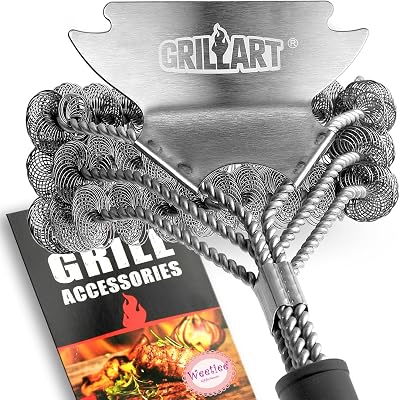 For the sweep-down
Bristle-free grill brush + scraper
After you poke the ports clear on the weak burner, this sweeps the carbon crust off the tube and out of the firebox so it does not settle straight back into the ports. The coiled head has no loose wire bristles to snap off near the ports, and the scraper edge lifts baked-on crust.
Fitment notes: the burner tube and flavorizer bar sets above are Weber-specific, never universal. Not sure which bars your grill takes? The Weber flavorizer bar guide sorts sizes by series, and the flavorizer bar cleaning guide covers keeping the set you have. For a burner tube on any other grill, measure the length and inlet diameter before ordering.
Burner tubes are model-specific. For the front-control Weber Spirit E-210 or S-210, this stainless aftermarket tube fits that model run exactly. Confirm your grill is the front-control 200-series before ordering.
Weber Spirit replacement burner tube on Amazon →
Not sure which Spirit you have? Our Spirit 200 vs 300 parts guide sorts it out. For the E-210 itself, see the Weber Spirit E-210 parts guide; for 300-series parts, the Weber Spirit 300 parts guide.
FAQ
Uneven heat across the grill is almost always one of three things: a burner on the hot side running at higher pressure than the others (check that all knobs are matched), a clogged burner or ports on the cool side that is not delivering its full share of heat, or flavorizer bars that are misaligned or worn through on one side. Work through the free-fix ladder above and you will almost always find it.
Yes and no. At lower settings, small differences in burner output become more noticeable. If the cold spots disappear at high heat, the problem is likely mismatched valve settings or a partially clogged port that the higher pressure compensates for. Clean the burners and run them all at matched settings to even things out.
Grill lid thermometers are notoriously inaccurate, often reading 50 to 100 degrees below actual grate temperature because they measure the air at lid level, not the cooking surface. Use an instant-read or grate-level thermometer for a true reading. If your grill seems undercooked but the lid gauge reads high, the gauge is likely reading low.
When the regulator trips into safety bypass mode, usually from opening the tank valve too quickly, it restricts gas flow to all burners simultaneously. The result is a grill that tops out at around 250 to 300 degrees no matter how high you turn the knobs. If all burners are running uniformly low and the tank is full, do the regulator reset before anything else.
Yes, and it is more common than most people expect. Spiders and mud daubers are attracted to the faint gas odor and build nests inside venturi tubes between cooks, especially during storage. A partial web in one burner tube creates a hot-cold split that looks mysterious until you find the nest. Inspect the venturi tubes before the first cook of the season.
If bars are installed at uneven heights or one has shifted out of position, they can redirect heat unevenly even when new. Check that all bars are seated at the same height and that none have slid off their supports. Warped bars from a single intense flare-up can also develop within one season if the grill was left on very high heat for extended periods.
A long preheat with unresolved cold spots points to a hardware issue, not a patience issue. Check burner ports for blockage on the cool-side burner, check that the venturi tube on that burner is clear, and make sure the flavorizer bars above it are intact and properly seated. If the burner itself has rust holes or visibly corroded ports, replacing that burner is the likely fix.
Related guides
-
Gas grill troubleshooting hub
Every common gas grill problem in one place: ignition, heat, and flame issues with free fixes first.
Read it → -
Propane grill not getting hot enough
Uniform low heat on all burners almost always traces to the regulator in bypass mode. Here is the fix.
Read it → -
Gas grill burner won't stay lit
Flame lights but dies? Regulator resets, clogged ports, and when to replace the part.
Read it → -
Gas grill burning yellow or orange
The same clogs that cool a burner down also yellow its flame. Full diagnosis, free fixes first.
Read it → -
How to clean grill burner tubes
The port-by-port clearing and venturi clearing behind rungs 3 and 5 of the ladder above.
Read it → -
Weber Spirit parts guides
Verified grates, burners, and flavorizer bars for the Spirit 200 and 300 series.
Read it →
Grab the free restore checklist. No email required. Get the free checklist.
Not a heat problem but the grill won't light at all? Gas grill won't ignite.