How to deep-clean a gas grill
~40 minutes · one messy step · every ~3 months if you cook fatty
Brushing the grates is the habit. The deep-clean is the quarterly teardown that gets the grease you cannot see: the stuff that drips down and pools under the burners and in the tray. The CPSC and NFPA both tie removing that grease and cleaning the tray to fewer flare-ups and grease fires. A closed grill passes 500°F within minutes, and that hidden grease is the fuel. It is the job most people put off, and putting it off is exactly how the fuel builds up.
Most of this, you already own
- • Heavy-duty aluminum foil: crumple a ball for a bristle-free grate scrubber, and line the grease tray so next time is lift-and-toss.
- • A pumice grill stone, if you have one: strips carbon off cast-iron grates without any wire.
- • Newspaper or a flattened cardboard box: lay it under a built-in to catch drips. You cannot drag a built-in to the hose, so protect the surround.
- • A bucket + dish soap: soak the grates and flavorizer bars in hot soapy water.
- • Old towels you can sacrifice + an old toothbrush: for the corners, the ignitor, and the knobs.
- • A putty knife from the garage: scrapes the flavorizer bars and firebox carbon as well as anything sold for it.
Buy the three things below only if you don’t already own a good version.
The short list worth buying
Three things that actually earn their place in a deep-clean. One pick per job. How we pick: bristle-free and grill-safe only, cross-checked against the 2026 CPSC recall list. We tell you what to skip before what to buy.
Heads up: The product links on this site are affiliate links. If you buy through them, Grill Patrol may earn a small commission at no extra cost to you. We only point to gear we’d put on our own grill. Disclosure.
-
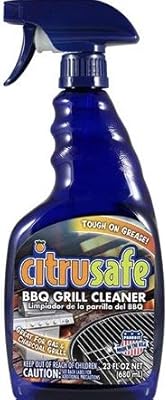 Top pick
Citrus grill degreaser
Cuts the baked-on grease a brush cannot touch: the stuff that pools under the burners and fuels flare-ups. Food-safe citrus formula. Apply to a COOL grill, never a hot one, then rinse.
-
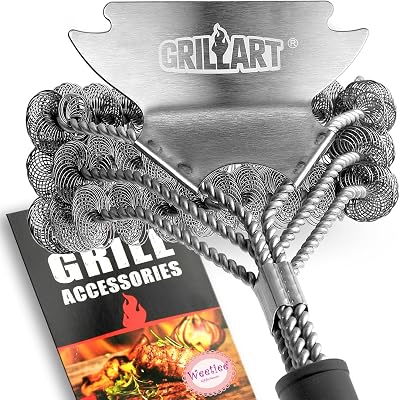
Bristle-free brush + scraper
No wire bristles to break off into your food. The scraper edge lifts carbon off the flavorizer bars and firebox; the head handles the grates.
-

Heat-resistant gloves
A deep-clean means handling greasy grates, heat tents, and degreaser. Keep all of it off your hands. Rated to 932F.
The teardown, step by step
- Burn it off, then kill the gas at the tank. Run the burners on high for 10-15 minutes with the lid closed to carbonize residue, then shut the burners off and let it drop to warm. Once it’s cool enough to touch, turn off the propane at the tank valve and disconnect the regulator. The burn-off is the only step that needs the gas on. Everything after this is scraping and degreaser, so you want the fuel off and the line disconnected before you go in. Warm grease lifts; a blazing grate warps and burns your hand.
- Brush the grates bristle-free, then pull them. Use a bristle-free brush or a crumpled foil ball. Never a wire brush; a stray bristle in a burger is an ER trip. Lift the grates out to soak. If the grates are coming up orange, stop here and get the rust off them properly first, and for a heavy cast-iron set, re-season the iron before it goes back on.
- Remove the heat tents / flavorizer bars and soak them. Drop them in the bucket with hot soapy water alongside the grates. Scrape heavy carbon with a putty knife.
- Scrape the firebox, then degrease it (cool, not hot). Push the carbon and debris down toward the grease drain with the putty knife or scraper. With the grill cool (the gas is already off and disconnected from step 1), spray a grill-safe citrus degreaser on the firebox walls, give it a few minutes, then wipe. Never use oven cleaner or any lye-based cleaner on an aluminum firebox or coated parts; it pits and corrodes them. Keep chemical cleaners off food-contact surfaces, and rinse anything that touches them with clean water.
- Clear the grease drain channel. This is the step people skip. A clogged drain backs grease up under the burners, and that is what flares on the next cook. Run a wadded paper towel or a bottle brush through it until it runs clear.
- Clean and reline the grease tray. Empty it, wipe it, and reline it (foil or a fitted liner) so the next clean is a lift-and-toss. A full tray is the most common flare-up source.
- Reassemble and burn off. Put it back together dry, run the burners 10-15 minutes to confirm they light evenly and to dry everything out.
A built-in cannot go to the driveway and the hose, so the whole job happens in place. Lay newspaper or cardboard under the doors to catch drips, soak parts in a bucket on the ground rather than rinsing into the cabinet, and keep degreaser off the surrounding stone or deck.
How often
Every ~3 months if you cook fatty or messy (ribs, burgers, anything that drips and flares). Lighter use, once or twice a season (Weber’s guidance). The trigger is not the calendar, it is the drips: when you can see grease pooling or the flare-ups start, it is time.
What real grillers get wrong
- Wire-bristle brushes. Weber recalled ~3.2 million metal wire brushes in February 2026 after bristles detached and ended up in food; a peer-reviewed study counted ~1,700 ER visits from swallowed bristles over 2002-2014, and the authors call that a likely undercount. Use bristle-free.
- Stainless tools on porcelain-coated grates. Brass or nylon is the safe default on a coated grate; stainless can chip the coating (check your grate’s manual). Nylon brushes are for fully cool grates only; they melt at grilling heat.
- Oven cleaner in the firebox. Lye-based cleaners corrode aluminum and coated parts. A grill-safe degreaser on a cool grill does the job without wrecking the metal.
- Skipping the grease drain and tray. The grease you cannot see is the grease that flares. The drain channel and the tray are the whole point of a deep-clean, not the shiny grates.
FAQ
Every ~3 months for fatty, high-drip cooking; once or twice a season for lighter use. Go by how much grease you see, not the calendar.
A grill-safe or citrus degreaser on a COOL grill, then a clean-water rinse on anything near food. Hot soapy water and a soak handle the grates and bars. Skip oven cleaner; it corrodes aluminum and coatings.
No. Lye-based oven cleaners pit and corrode aluminum fireboxes and coated parts, and they are not meant for food-contact surfaces. Use a grill-safe degreaser instead.
Yes. Do it in place: protect the surround with newspaper or cardboard, soak removable parts in a bucket, and keep degreaser and runoff off the surrounding stone or deck.
Related guides
Best grill cleaner picks
Which degreasers and cleaners actually work inside a greasy gas grill.
How often to clean a gas grill
A simple cadence that keeps grease from ever building back up to deep-clean levels.
Grill Patrol rounds up honest, tested gear for rescuing and maintaining your grill. The restore kit is the short list of what actually helps.
See the restore kit →