Wire brush alternatives
Three safe methods that actually work · no wire bristles, lower risk
"The danger isn't the brand. It's the wire. A single bristle in a burger can mean an ER visit. Replace any wire brush with a bristle-free brush, a crumpled foil ball, or a pumice grill stone. Full stop."
Roughly 17 million wire-bristle grill brushes were recalled in 2026 across Weber, Nexgrill, and Cuisinart, all citing the same hazard: metal bristles that detach, stick to grates, and end up in food. The fix is simple. Below are the three methods Grill Patrol recommends, in order of ease.
Option 1: Bristle-free brush
The easiest swap. A bristle-free brush looks and works like a wire brush but replaces the individual metal bristles with a coiled-wire or scraper head. Nothing can snap off as a single bristle and transfer to your food. It's the pick Grill Patrol puts in every kit and recommends across every guide.
How to use: Preheat the grill for 10 minutes. Scrub the grates with the bristle-free head using firm strokes. The scraper edge on the back handles stubborn baked-on carbon. Done. Clean after every cook and it stays easy.
Heads up: The product links on this site are affiliate links. If you buy through them, Grill Patrol may earn a small commission at no extra cost to you. We only point to gear we’d put on our own grill. Disclosure.
-
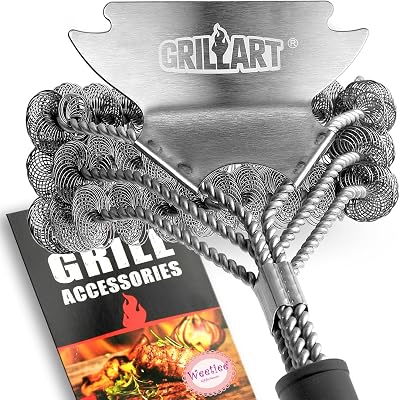 Best overall
Bristle-free grill brush + scraper
A coiled-wire scraper head: the cleaning surface is one continuous coil, so no single metal bristle can snap off, stick to a grate bar, and end up in food. A built-in scraper edge on the back handles baked-on carbon the coil misses. Preheat the grill about 10 minutes, then scrub with firm strokes. The bristle-free pick in every Grill Patrol kit.
Option 2: Crumpled foil ball
Free. Zero purchases required. A crumpled ball of aluminum foil cleans a hot grill grate effectively and has no wire bristles; discard torn foil and inspect and wipe grates before cooking. This isn't a hack -- it's a legitimate, widely used cleaning method.
- 1. Heat the grill. Preheat on high for 10 minutes. Hot grates release carbon much more easily than cold ones.
- 2. Make the ball. Tear off a sheet of heavy-duty aluminum foil (about 12 inches). Crumple it into a firm ball roughly the size of a baseball.
- 3. Grip with tongs. Use long-handled tongs -- not your hands -- to hold the foil ball. The grates are hot.
- 4. Scrub. Run the foil ball back and forth along the grate bars with firm pressure. The abrasive foil strips grease and carbon. Work each bar.
- 5. Discard. The used foil goes in the trash. Use a fresh piece next cook.
Best for: Quick post-cook cleanup when you are already at the grill and don't have a brush nearby. Not the best choice for heavy carbon buildup or cast-iron grates with deep grooves.
Option 3: Pumice grill stone
A pumice grill stone is a rectangular block of natural volcanic rock -- the same material used in foot-care pumice stones, scaled up and shaped for grill grates. The porous abrasive surface strips baked-on carbon and grease without any wires or bristles.
- 1. Use on a warm (not screaming-hot) grate. Let the grill cool to medium heat, or clean after a short cooldown. High heat can crack the stone.
- 2. Rub lengthwise along the grate bars. Apply moderate pressure and work each bar from end to end. The stone conforms to the grate surface over time.
- 3. Rinse the grate. Wipe off the gray pumice residue with a damp cloth or paper towel. It's non-toxic but you don't want it in food.
- No metal bristles or wires; wipe away pumice residue.
- Works best on cast iron and bare steel; check manufacturer guidance before porcelain-coated grates.
- Excellent for deep carbon buildup on cast iron
- Long-lasting -- one stone handles many cooks
- Slower than a brush for light maintenance
- Leaves gray residue that must be wiped
- Stone wears down over time
- Not ideal on very hot grates
Heads up: The product links on this site are affiliate links. If you buy through them, Grill Patrol may earn a small commission at no extra cost to you. We only point to gear we’d put on our own grill. Disclosure.
-
 Verified pick
Maryton Grill Stone Cleaning Brick (3-Pack)
Three natural pumice blocks sized for standard grate bars. Run one back and forth along each bar on a cool or warm grate, not a screaming-hot one, and the porous volcanic surface strips baked-on carbon and grease with no wire or bristle to shed. Works best on cast iron and bare steel. Wipe the gray residue with a damp cloth before cooking. One block lasts many cooks, and the 3-pack covers a full season.
What else we verify
No brand pays us to feature a product here. Every pick is a current Amazon listing we re-check for stock and recall status, with a real track record of buyer reviews rather than a brand we have not seen hold up.
Comparison: which method is right for you?
All three methods are safe. The right choice depends on how you grill.
| Method | Cost | Effort | Safety | Best for |
|---|---|---|---|---|
| Bristle-free brush | One-time purchase | Low | No bristles to shed | Every cook, quick and reliable |
| Crumpled foil ball | Free (uses foil you own) | Low | No bristles; single-use, no reuse hazard | Light cleanup, no brush handy |
| Pumice grill stone | Low (stone lasts many uses) | Medium | No bristles; rinse residue | Heavy carbon buildup, cast iron |
Wire brush alternative FAQ
Yes. The hazard is the design, not the brand. Any brush with individual metal wire bristles can shed a bristle onto your grill grates. That bristle transfers to food and, if swallowed, can cause serious internal injuries. Two major CPSC recalls in 2026 -- Weber (3.2M brushes) and Nexgrill (10.2M brushes) -- confirmed this isn't a fringe risk. The safest move is to replace any wire-bristle brush with a bristle-free option.
Yes, on a warm or hot grate. A coiled-wire or scraper-style bristle-free head removes baked-on carbon and grease without shedding anything into your food. The trade-off: bristle-free heads take a few extra passes on a cold grate with heavy carbon buildup. Preheat the grill for 10 minutes before cleaning and you won't notice the difference.
Yes. Grab a sheet of heavy-duty foil, crumple it into a baseball-sized ball, grip it with long tongs, and scrub the grates while they are hot. The foil abrades carbon and grease effectively. It's free, it has no wire bristles; discard torn foil and inspect and wipe grates before cooking. And it works. The only downside is that it's a one-time tool per cook -- you crumple a fresh piece each time.
A pumice grill stone is a rectangular block of natural volcanic rock, similar to the pumice stone used for feet. You run it back and forth along cold or warm grates (not screaming-hot ones) and the abrasive surface strips carbon and grease without any bristles or wires. It's especially effective on cast-iron grates. The stone itself slowly wears down with use. It's a legitimate cleaning method, and our verified pick, the Maryton grill stone 3-pack, is featured above.
Grill Patrol recommends bristle-free across every guide. See the full buyer's guide for every option worth buying.
See the safest grill brushes →2026 recall details (Weber + Nexgrill) → · Deep-clean your grill →