How to restore a rusty Blackstone griddle
About an afternoon · 5 steps · the seasoning is the part that needs patience
By the Grill Patrol editors · Published June 22, 2026
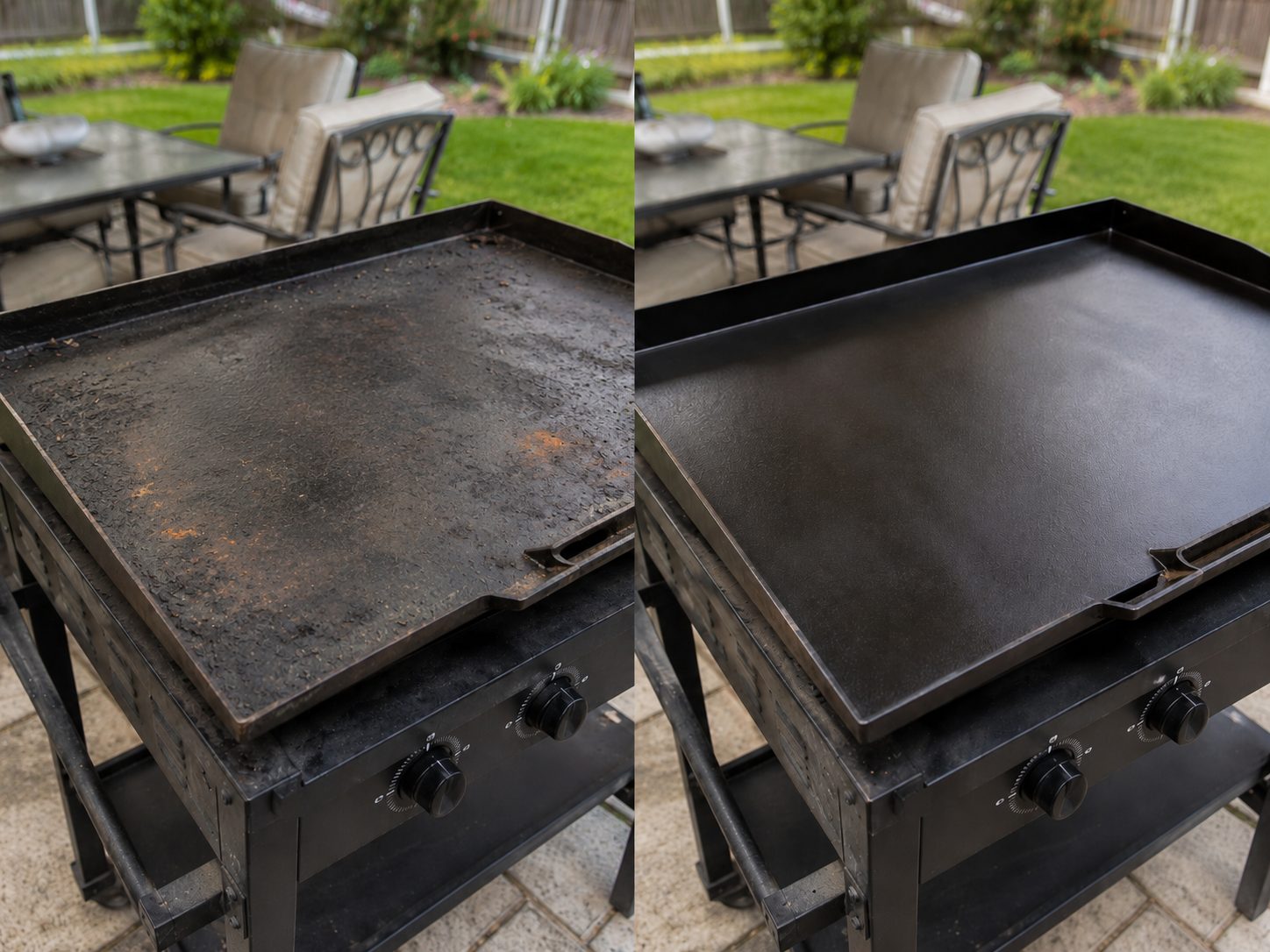
A rusty Blackstone griddle looks worse than it is. Surface rust and a wrecked seasoning layer are the two most common problems, and both are fixable in one afternoon. The flat steel top is forgiving: scrape it back to bare metal, clean it, dry it completely, and build the seasoning back up with thin oil coats. Done right, it cooks like the day you bought it.
Is the griddle worth saving?
Check the steel before you spend the afternoon on it.
- • Save it if the rust is on the surface and the griddle top sits flat. Surface rust, even heavy flaky rust, is a cleaning job. Set a straightedge across the top; if it sits flat, the steel is fine.
- • Replace the top if the surface is warped badly enough to rock or pool oil to one side, or if the steel is pitted all the way through over a large area. Blackstone sells replacement griddle tops for most models, and a new top costs far less than a new unit.
Most rusty griddles fall in the first bucket. Rust on the surface is almost never the end of the griddle.
The restore, step by step
- Scrape off the old seasoning and loose rust. Gloves on first; the edges and corners are sharp. With the griddle cold, run a metal scraper across the surface in overlapping strokes toward the grease trap, pushing the flaking seasoning, rust, and carbon off the top. You are not going gentle here. The goal is to clear the failed layer down toward the steel.
- Grind out the rust and degrease. Work a griddle stone over the rust spots to grind them back to bare metal, then spray the surface with a griddle cleaner or citrus degreaser and let it sit a few minutes. Wipe it down with paper towels or shop cloths toward the grease trap. Repeat the stone-and-wipe until the towels come up clean and the surface is an even gray steel.
- Dry it completely before you season. Bare steel flash-rusts fast. Towel the surface dry right away, then turn all burners to high for five to ten minutes to drive off every trace of moisture and cleaner. The top should smoke a little as the last of it burns away. When the smoke stops and the surface is uniformly dark and dry, it is ready to season.
- Season with thin oil coats. With the burners still on high, pour a small amount of high-smoke-point oil or griddle conditioner onto the hot surface and spread it with a folded cloth held in tongs. Wipe it as thin as you can. You want a film, not a puddle. Let it smoke and cure for ten to fifteen minutes until the smoking mostly stops. That is one coat. Repeat the thin-coat-and-cure cycle three to five times until the surface is dark, even, and slick. Each coat builds on the last.
- Keep it seasoned. After every cook, scrape the surface clean while it is still hot, wipe on a thin oil coat, and put the cover on. A griddle maintained this way barely rusts. The seasoning keeps building and becomes the non-stick surface that makes a Blackstone worth owning. Skip this for a few weeks in a damp garage and you are back to step one.
Why not a wire brush
It is tempting to take a wire brush to a rusty griddle, but a worn brush sheds bristles exactly when you are scrubbing hardest, and a stray wire bristle in food is a real hazard. That is the reasoning behind the 2026 CPSC recall of millions of wire grill brushes. A griddle stone and a steel scraper clear rust and carbon off a flat top just as well, without the bristle risk. More on that at the safest grill brushes.
The short list for the job
Now that you know the steps, here is the gear that earns its place. One pick per job: derust the top, build the seasoning back, and keep your hands off the hot steel. How we pick: bristle-free and griddle-safe only, and we tell you what to skip before what to buy.
Heads up: The product links on this site are affiliate links. If you buy through them, Grill Patrol may earn a small commission at no extra cost to you. We only point to gear we’d put on our own grill. Disclosure.
-
 Start here
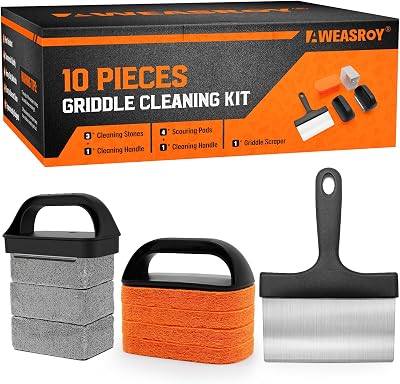
Griddle cleaning kit with scraper and stone
A rusty griddle has to be scraped back to bare steel before anything else works. This kit pairs a steel scraper with a griddle stone that grinds surface rust and old carbon off the flat top, no wire bristles involved. Work it cold for the loose rust, then warm for the stuck-on spots.
-
 Season it
Blackstone griddle seasoning and cast iron conditioner
Once the top is bare steel, this is what builds the seasoning back. Blackstone's own blend wipes on in thin coats and cures into the dark, non-stick surface a griddle needs. Plan on several thin coats, not one thick one. Thin is what polymerizes smooth instead of turning gummy.
-

Heat-resistant grill gloves
A griddle restore means handling sharp rust edges during the scrape and a screaming-hot surface during the season burn-in. Keep all of it off your hands. Rated to 932°F so you can work warm metal safely.
FAQ
Yes, in almost every case. Surface rust and a wrecked seasoning layer are normal and come off with a scrape, a scrub, and a re-season. The only time to replace the griddle top is if it is warped badly enough to rock, or if the steel is pitted all the way through over a large area. Surface rust is a cleaning problem, not a replacement problem.
Plan on three to five thin coats, not one heavy one. Thin is the whole trick. A thick coat turns sticky and gummy instead of curing into a smooth, non-stick layer. Each coat takes about 10 to 15 minutes on high heat to smoke off and set before you add the next.
Any high-smoke-point oil works: canola, grapeseed, or flaxseed. A dedicated griddle seasoning and conditioner also works well for the cure coats. Avoid olive oil; its smoke point is too low and it goes rancid rather than curing into a seasoning layer. A thin coat matters more than which oil you pick.
For the full restore, a griddle stone plus a scraper does the heavy lifting on rust and old carbon, and a citrus degreaser or griddle cleaner cuts the grease. For routine cooks after that, water and a scraper while the griddle is still warm is usually enough. Save the heavy cleaning for the restore.
Scrape the surface clean while it is still hot after every cook, wipe on a thin oil coat, and keep the griddle covered and dry. A griddle that is kept seasoned and covered barely rusts. The seasoning builds up over time and becomes the non-stick layer that makes the griddle worth owning.
Keep reading
The restore kit
The short list of honest gear for rescuing a hand-me-down or neglected grill.
Restore cast iron grates
The same derust-and-season process for cast iron grates on a gas grill.
Is it worth restoring?
The honest decision framework before you put time into any rescue.
Grill Patrol rounds up honest gear for rescuing and maintaining your grill. The restore kit is the short list of what actually helps.
See the restore kit →