Bristle-free grill cleaner types
Six types compared · zero wire bristles · honest weaknesses for each
Every bristle-free grill cleaner on the market falls into one of six types: coil and spring brushes, woven nylon and mesh pads, metal scrapers, steam pad brushes, crumpled foil balls, and wood scrapers. All six clean a hot grate without shedding a wire bristle, which matters after the 2026 recalls pulled roughly 17 million wire-bristle brushes from use. For most grillers the coil bristle-free brush is the pick; a scraper covers heavy carbon and foil is the free backup. The matrix below compares all six at a glance, and each capsule explains the type in full.
The type matrix
Six types, six columns. Every row answers the same questions: how the cleaner works, whether it can shed anything into food, where it fits, and where it falls short.
| Type | How it works | Bristle risk | Best for | Weaknesses | Notes |
|---|---|---|---|---|---|
| Coil / spring bristle-free brush | One continuous coil of stiff wire does the scrubbing. It cleans like a brush, but the coil is a single connected piece, so nothing can snap off as an individual bristle. | None. There are no individual bristles to shed. | Every-cook maintenance on a preheated grate. The default choice. | Needs a hot grate to clean easily; the coil clogs with grease if never rinsed; heads wear out eventually. | Most include a scraper edge on the back for baked-on carbon. |
| Woven nylon brush / mesh pad | Woven nylon strands or a mesh pad scrub the grate. Nylon is stiff enough for grease when warm and soft enough for coated grates. | Very low. Nylon strands can shed, but a soft strand is not the ingestion hazard a stiff wire bristle is. Still wipe the grate before cooking. | Porcelain-coated and cast-iron grates that scratch easily; gentle weekly cleaning. | Melts on a fully preheated grate; pads and bristles wear faster than metal coils. | Keep the grate warm rather than screaming hot when you scrub. |
| Metal scraper | A solid bar of stainless steel with a shaped edge. You draw the edge along each grate bar to peel off carbon. Nothing attached, nothing to shed. | None. It is one solid piece of metal. | Heavy carbon buildup and deep cleans where you work bar by bar. | Slower than a brush for routine cleaning; the edge dulls; pressing too hard can gouge porcelain. | The best complement to a coil brush: brush for speed, scrape for the tough spots. |
| Steam pad brush | A water-soaked pad, or a small reservoir in the handle, turns grill heat into steam that loosens grease before the pad wipes it away. | None. | Frequent grillers fighting greasy grates; quick cleans while the grill is still hot. | Only works on a hot grate; pads are consumables you replace every few months. | Run the grill 5 to 10 minutes first so there is heat to make steam. |
| Crumpled foil ball | A sheet of heavy-duty foil crumpled into a baseball-sized ball, held in long tongs and scrubbed across hot grates. | None. Soft aluminum cannot pierce or lodge like a wire bristle. | A free backup when no brush is within reach; light post-cook cleanup. | Single use; not enough for deep carbon; needs tongs and a hot grate. | Discard torn pieces and wipe the grate before cooking, same as with any method. |
| Wood scraper | A hardwood block, usually oak. You scrape the warm grate and the block slowly carves grooves that match your exact grate spacing. | None. | Cast-iron grates and anyone who wants one tool that lasts for years. | Takes several cooks to break in; slower bar-by-bar scraping; needs occasional oiling to prevent cracking. | Once the grooves form to your grates, it cleans faster than you would expect. |
Want this table as a file? Download the machine-readable dataset: bristle-free-cleaner-types.csv → The research page lists every Grill Patrol dataset, this one included, with the methodology behind them.
Coil and spring bristle-free brushes
A coil bristle-free brush is the type Grill Patrol recommends for most grillers. A single continuous coil of stiff wire replaces the bristle pad, so it scrubs like a brush but has no individual bristle that can snap off, stick to a grate bar, and end up in food.
How to use it: preheat the grill for about 10 minutes, then scrub with firm strokes. Most heads carry a scraper edge on the back for baked-on carbon. Rinse the coil occasionally so it does not clog with grease, and replace the head when the coils flatten out. This is the pick that ships in every Grill Patrol kit and the default recommendation across the bristle-free buyer guide.
Heads up: The product links on this site are affiliate links. If you buy through them, Grill Patrol may earn a small commission at no extra cost to you. We only point to gear we’d put on our own grill. Disclosure.
-
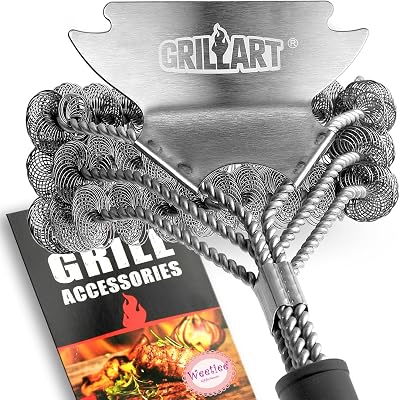 Best overall
Bristle-free grill brush + scraper
A coiled-wire scraper head: the cleaning surface is one continuous coil, so no single metal bristle can snap off, stick to a grate bar, and end up in food. A built-in scraper edge on the back handles baked-on carbon the coil misses. Preheat the grill about 10 minutes, then scrub with firm strokes. The bristle-free pick in every Grill Patrol kit.
Woven nylon brushes and mesh pads
Woven nylon and mesh cleaners are the gentle option. The woven strands or mesh pad strip grease without scratching, which makes them the best type for porcelain-coated grates and for seasoning-fresh cast iron that aggressive tools would strip.
The one rule: heat. Nylon melts, so scrub a warm grate, never a fully preheated one; give the grill a few minutes rather than ten, or clean after a short cooldown. Nylon strands can shed, but a soft strand cannot puncture like a wire bristle. Wipe the grate with a damp cloth after cleaning and replace pads or heads once they fray.
Metal scrapers
A metal scraper is the heavy-carbon tool. It is a solid bar of stainless steel with a shaped edge: nothing attached, nothing to shed. You draw the edge along each grate bar and peel off buildup that a brush would just polish over.
How to use it: work bar by bar with moderate pressure while the grates are warm. It is slower than a brush for routine cleaning, which is why it pairs so well with a coil brush: brush for speed, scrape for the spots that resist. Let the edge do the work on porcelain grates; forcing it can gouge the coating. Many coil brushes include a scraper edge on the back of the head, which covers both tools in one purchase.
Steam pad brushes
A steam pad brush uses the grill's own heat against the grease. A water-soaked pad or a small reservoir in the handle makes steam on contact with the hot grate, loosening residue before the pad wipes it away. It is the step-up type for people who grill several times a week.
How to use it: run the grill 5 to 10 minutes first so there is heat to make steam, then press and draw the pad across the grates. The catch is that steam only exists on a hot grate, so this tool does nothing during a cold deep clean, and the pads are consumables you replace every few months. For greasy every-week grates, it is the fastest clean on this list.
Heads up: The product links on this site are affiliate links. If you buy through them, Grill Patrol may earn a small commission at no extra cost to you. We only point to gear we’d put on our own grill. Disclosure.
-
 Premium pick
GRILLART bristle-free steam brush
A heavier-duty bristle-free head with a replaceable cleaning pad. Steam-cleans grates without any wire that can break off into your food. Step up if you grill often.
Crumpled foil balls
The foil ball is the free method: crumple a sheet of heavy-duty foil into a baseball-sized ball, grip it with long tongs, and scrub the hot grates. Soft aluminum cannot pierce or lodge the way a wire bristle can, so it clears the safety bar with zero purchases.
Limits: one ball per cook, best for light post-cook cleanup rather than deep carbon, and you need tongs plus a hot grate. Discard torn pieces and wipe the grate before food goes on. If you want the fuller method guide, the wire brush alternatives page walks through foil step by step alongside the pumice stone.
Wood scrapers
A wood scraper is a hardwood block, usually oak, that you run across warm grates. Over several cooks the face of the block carves grooves that match your exact grate spacing, after which it cleans bar by bar with zero shed risk and lasts for years.
Trade-offs: the break-in period is real. Until the grooves form, a wood scraper is slower than any brush on this page, and the block needs occasional food-safe oiling to prevent cracking. It rewards patient grillers, especially on cast iron, and it is a favorite in low-and-slow circles for exactly that set-it-and-forget-it durability.
Which type should you choose?
- Most grillers: a coil or spring bristle-free brush. Closest one-to-one wire brush replacement, under a minute of cleaning after every cook.
- Porcelain or delicate grates: woven nylon or mesh, used warm rather than hot.
- Heavy carbon or a neglected grill: a metal scraper, working bar by bar, or the full teardown in the deep-clean guide.
- Grilling several times a week: step up to a steam pad brush for the fastest grease cut.
- No budget right now: the foil ball, plus a wipe-down before every cook.
- Patient cast-iron cooks: a wood scraper that breaks in to your grates.
Still holding a wire brush after the 2026 recalls? Check the model number against the recall tracker before your next cook.
What else we verify
No brand pays us to feature a product here. Every pick is a current Amazon listing we re-check for stock and recall status, with a real track record of buyer reviews rather than a brand we have not seen hold up.
Bristle-free cleaner FAQ
Any cleaner whose scrubbing surface is one connected piece: a coil or spring bristle-free brush, a metal scraper, or a wood scraper. None of them can shed an individual wire bristle into food. That hazard is exactly why roughly 17 million wire-bristle brushes were recalled in 2026 across Weber, Nexgrill, and Cuisinart.
On a preheated grate, yes. Ten minutes on high chars food residue loose, and a coil brush or scraper removes it with firm strokes. The trade-off is cold grates: heavy carbon that a wire brush would chew through takes a scraper or a hot soapy soak instead. Clean after every cook and bristle-free tools keep the job easy.
Nylon strands can shed, but a soft nylon strand is not the ingestion hazard a stiff wire bristle is: it cannot puncture the mouth, throat, or intestines. Still, wipe grates with a damp cloth after using any nylon or mesh tool, and replace pads once they look frayed.
Yes. Crumple a sheet of heavy-duty foil into a baseball-sized ball, grip it with long tongs, and scrub hot grates. Soft aluminum cannot pierce or lodge like a wire bristle. Discard torn pieces, use a fresh ball each cook, and wipe the grate before food goes on.
For patient grillers, yes. A hardwood block takes several cooks to carve grooves that match your grates, but then it cleans bar by bar with zero shed risk, works on cast iron, and lasts for years with occasional oiling. It is slower than a brush, so it suits deep cleans more than every-cook maintenance.
A coil or spring bristle-free brush. It is the closest one-to-one replacement for a wire brush, it handles every-cook maintenance in under a minute, and most include a scraper edge for baked-on carbon. Add a steam pad brush if you grill several times a week, and keep foil as the free backup. The full comparison lives in the bristle-free buyer guide on Grill Patrol.
All six types clean without wire bristles. The buyer guide compares the verified picks side by side.
See the safest grill brushes →